5 of 16
Pulse V60
30 gto500 g
96 °C · ~3:30
Bloom, then four small pours.
Updated 18 Oct
Why it works
Two big pours stir the bed twice. Four small ones stir it gently, four times, and keep the water in contact longer.
- Section A–A60 guntil 0:45CO₂escapesBed30 g, wet
1 of 4
Bloom
Twice the dose, over the whole bed. Wait until it stops bubbling.
Very fresh coffee may stay active a little longer. Start the next pour once the gas has settled, not by the clock. - Section A–A500 guntil 2:35Pulsesfour, smallBedsettles
2 of 4
Four pulse pours
Slow circles to 200 g, then 300, 400 and 500 g.
Pour again once the level drops a little and the surface settles. Let the bed guide you more than the clock. - Section A–A2:50Spoonone turnBedlevels out
3 of 4
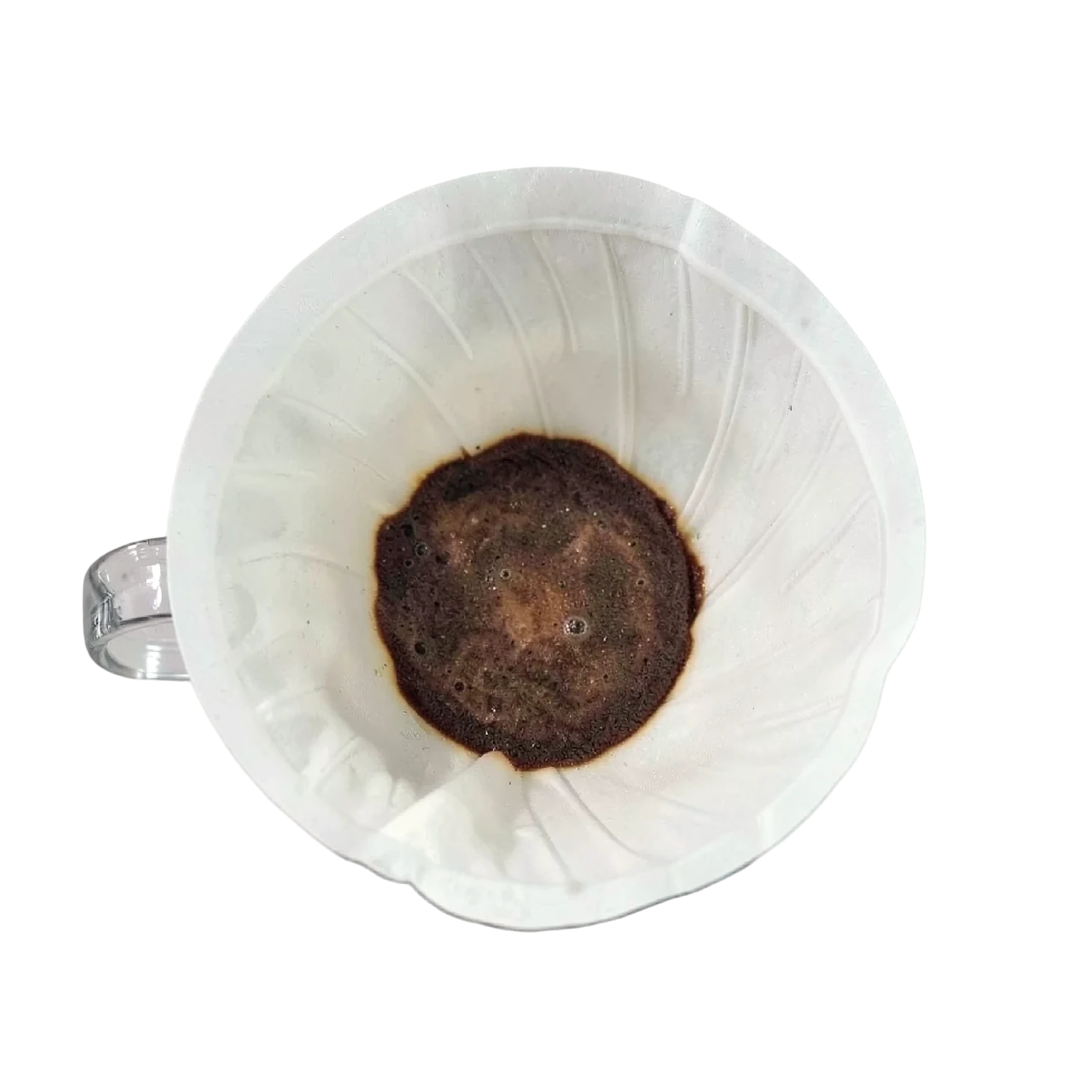
One stir
One gentle turn knocks the grounds off the filter wall.
Grounds that climb the paper sit above the water and drain less evenly than the bed. One rotation is enough. - Section A–A~3:30Bedleave itServertwo mugs
4 of 4
Drawdown
Drains well before 3:00: grind finer. Stalls past 4:00: coarser.
Change the grind before you touch the temperature or the pours. The cup decides.
Deeper
Why four small pours instead of two?
Most V60 recipes use two main pours after the bloom. This one uses four smaller ones. The reason is control over agitation and bed saturation. Each pour agitates the grounds briefly, then gives them a moment to settle before the next addition. The pattern extends the time the water spends in contact with the bed without simply slowing the pour rate.
Why so hot?
96 °C is hotter than the 93 °C most V60 recipes use, and that is on purpose. The extra heat speeds up solubility. Lightly roasted single origins are often denser and less porous than darker roasts, and the heat helps pull the soluble compounds that give them their character.
For medium and medium-dark roasts a cooler brew often reads cleaner. Go two or three degrees down and taste the difference.
What does the stir after the last pour do?
During the pours some grounds climb the paper and sit above the water line. They drain less efficiently than the bed. One gentle stir knocks them back down, so the whole bed draws down evenly.
How do I read the cup?
Taste the cup while it is still warm. Sharp sourness and a thin body usually signal under-extraction: the water passed through before it had time to pull enough from the grounds. Grind finer and rebrew. Bitterness and a drying, astringent finish point the other way: too much was extracted. Grind coarser or drop the temperature a couple of degrees.
The drawdown is your second signal. A bed that drains in well under three minutes likely has a grind that is too coarse. A stalled bed that is still wet past four minutes is usually too fine. In either case, change the grind before touching the temperature or the pour pattern.
Does Onyx brew it like this?
Onyx Coffee Lab publishes a brew guide per coffee through its online tool, and its temperatures and pour weights vary by origin, process and roast. This recipe follows the style, hot water and small pulses, with numbers of our own. For a bag from Onyx, its current guide for that coffee is the better start.